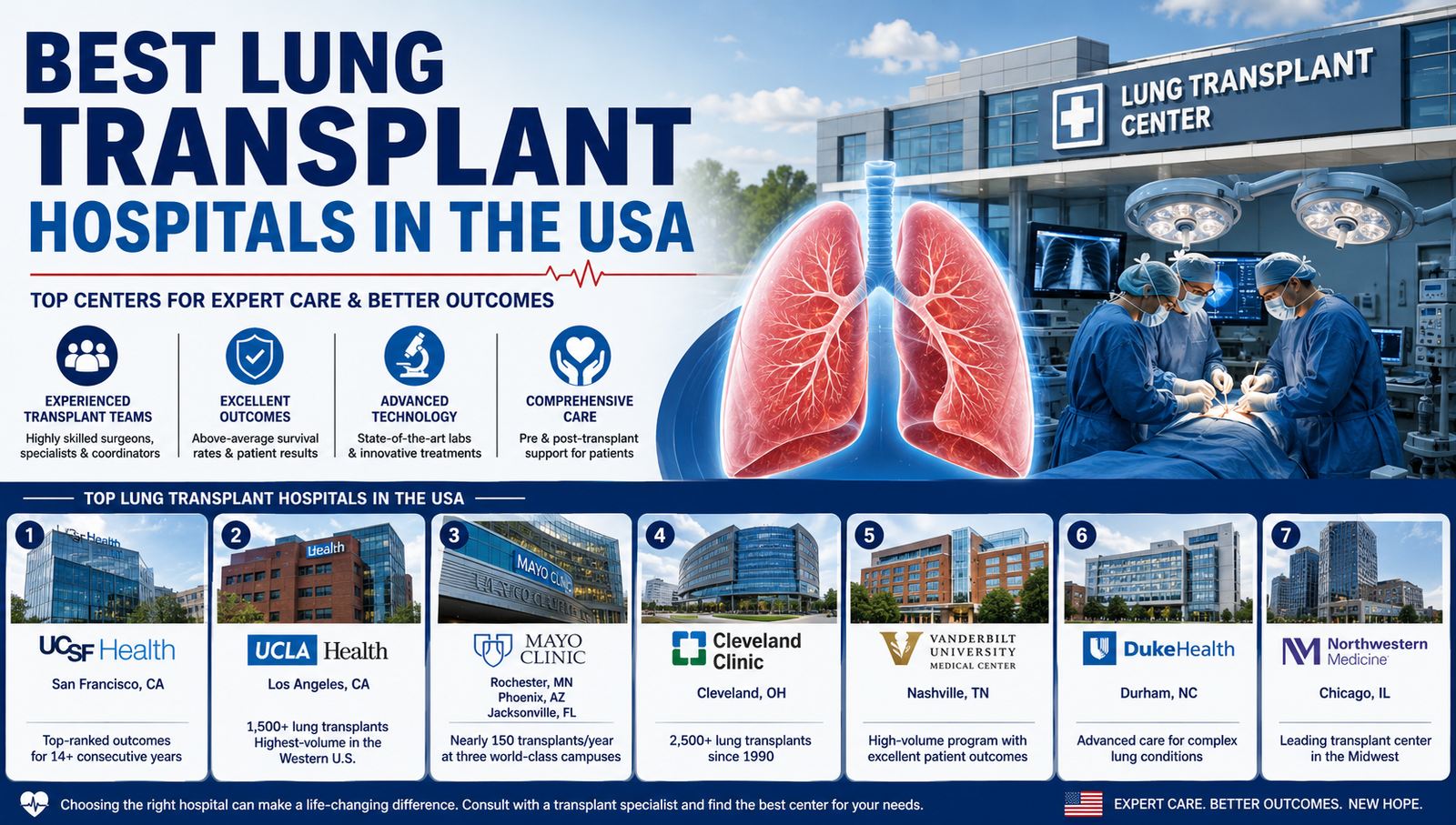
A lung transplant can be a life-changing treatment for people with advanced lung disease when other therapies are no longer effective. Choosing the right transplant hospital is one of the most important decisions a patient and family can make. Factors such as transplant experience, patient outcomes, multidisciplinary care, access to specialized treatments, research programs, and post-transplant support can all matter.
There is no single hospital that is officially “the best” for every patient. The Scientific Registry of Transplant Recipients (SRTR) allows patients to compare U.S. transplant programs using measures such as waitlist outcomes, access to deceased-donor transplantation, and one-year lung survival. As of 2026, the SRTR provides current program-specific data and allows patients to compare centers directly.
Here are several leading lung transplant hospitals in the United States that are worth considering.
1. UCSF Health San Francisco, California
UCSF Health is one of the most highly regarded lung transplant programs in the United States. Its program performed 89 lung transplants in 2025 and reported a one-year survival rate of 93.16%, compared with a national average of 88.63%. Its reported three-year survival rate was 83.89%, compared with 72.69% nationally.
In March 2026, UCSF reported that its Lung Transplant Program had been recognized as the top-performing lung transplant program in the nation by INTERLINK for the third consecutive year. UCSF also reported significantly higher-than-expected one- and three-year survival rates for 14 consecutive years according to SRTR data.
The center may be particularly attractive to patients seeking advanced pulmonary care combined with transplant expertise, research, and complex case management.
2. UCLA Health Los Angeles, California
UCLA Health has one of the largest and most experienced lung transplant programs in the country. UCLA reports that it has performed more than 1,500 lung replacements and is the highest-volume thoracic transplant center in the western United States. The program also states that it is the second busiest in the country.
One advantage of a high-volume center is extensive experience with a broad range of patients and complex medical situations. UCLA also treats patients who may have been turned away by other programs, including some people requiring multiorgan transplantation.
For patients on the West Coast, UCLA can therefore be an important center to evaluate when seeking a lung transplant consultation.
3. Mayo Clinic Minnesota, Arizona and Florida
Mayo Clinic operates lung transplant programs at its campuses in Rochester, Minnesota; Phoenix/Scottsdale, Arizona; and Jacksonville, Florida. Mayo reports that its three-site program performs nearly 150 lung transplants per year.
Mayo’s lung transplant program provides a multidisciplinary approach involving pulmonologists, thoracic surgeons, cardiac surgeons, infectious-disease specialists, and other medical professionals. The center performs single-lung, double-lung, and multiorgan transplant procedures.
Mayo also has experience treating complex conditions such as pulmonary fibrosis, COPD, cystic fibrosis, pulmonary hypertension, sarcoidosis, severe bronchiectasis, and alpha-1 antitrypsin deficiency.
Patients with complicated medical histories may benefit from Mayo’s broad range of medical specialties and integrated transplant services.
4. Cleveland Clinic – Cleveland, Ohio
Cleveland Clinic is another major U.S. lung transplant center with extensive experience. Its Lung Transplant Program reports more than 2,500 lung transplants since the program began in 1990 and states that its long-term survival rates are above the national average.
The program has experience with patients who require additional cardiac procedures, as well as people with complex medical conditions. Cleveland Clinic also has experience evaluating higher-risk candidates and patients who may have been declined by other transplant centers.
Its combination of lung transplantation, cardiology, cardiac surgery, and other specialties can be valuable for patients whose lung disease is accompanied by significant heart or other medical problems.
5. Vanderbilt University Medical Center Nashville, Tennessee
Vanderbilt University Medical Center is another major lung transplant center in the United States. Current SRTR search results show Vanderbilt among the highest-volume adult lung transplant programs, with 149 deceased-donor lung transplants reported in a year in the center comparison data.
High transplant volume can be an important factor when comparing centers, but patients should not judge a hospital on volume alone. Waitlist survival, post-transplant survival, patient selection, donor availability, and individual medical circumstances should all be considered.
Vanderbilt is therefore a strong center to include when researching high-volume lung transplant programs.
6. Duke University Hospital Durham, North Carolina
Duke University Hospital is another established U.S. transplant center. SRTR’s current center search lists Duke among adult lung transplant programs, with 104 deceased-donor lung transplants reported in a year in its comparison data.
Duke can be an important option for patients in the Southeast and for individuals looking for care within a large academic medical system. As with any transplant program, prospective patients should review the center’s current SRTR report and discuss their individual case with the transplant team.
7. Northwestern Memorial Hospital Chicago, Illinois
Northwestern Memorial Hospital is a major lung transplant center serving patients in the Midwest. Current SRTR search results list 129 adult deceased-donor lung transplants in a year for the program.
Its location can make it a practical option for patients from Illinois and neighboring states. Patients should compare its current program-specific outcomes with other centers and consider travel requirements, insurance coverage, and long-term follow-up arrangements.
How to Choose the Best Lung Transplant Hospital
Choosing a transplant center should involve more than looking for a hospital with a high ranking. The best center for one patient may not be the best choice for another.
Start by reviewing the center’s SRTR program-specific report. SRTR compares transplant programs with national outcomes and provides information about waitlist survival, transplant rates, and one-year lung survival.
You should also ask about:
- Annual lung transplant volume
- One-year and longer-term survival
- Waitlist mortality
- Average waiting time and donor availability
- Experience with your specific lung disease
- Experience with high-risk or complex patients
- Availability of heart-lung or multiorgan transplantation
- Clinical trials and advanced therapies
- Insurance acceptance and financial assistance
- Housing and travel requirements
- Post-transplant monitoring and rehabilitation
Distance is another practical consideration. After transplantation, patients require frequent medical appointments, laboratory testing, medication adjustments, and monitoring. A center that is extremely far from home may create additional logistical challenges.
Final Thoughts
The USA has several world-class lung transplant hospitals, including UCSF Health, UCLA Health, Mayo Clinic, Cleveland Clinic, Vanderbilt University Medical Center, Duke University Hospital, and Northwestern Memorial Hospital.
However, there is no universally best hospital for every patient. Current SRTR data should be used alongside the transplant team’s experience, your specific diagnosis, age, overall health, insurance situation, and personal preferences.
For someone considering a lung transplant in 2026, getting evaluated by more than one experienced transplant center can be a useful way to understand eligibility, treatment options, expected outcomes, and the practical realities of transplantation. The ultimate goal should be finding a program with strong outcomes and the expertise needed for your individual medical situation.